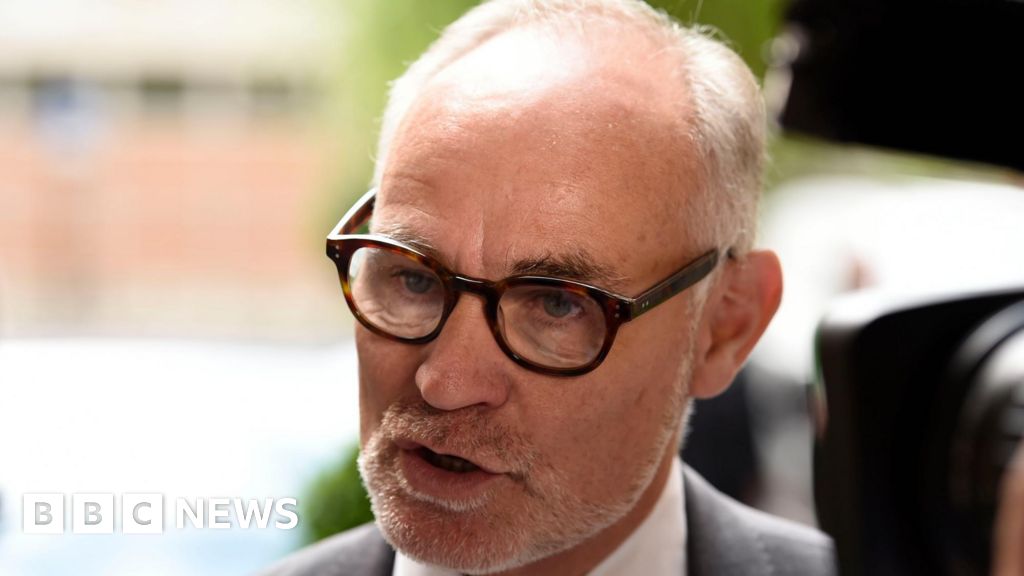
Former Conservative MP Crispin Blunt to Face Court on Multiple Drug Charges
In a development that has sent ripples through political circles, former Conservative Member of Parliament Crispin Blunt is scheduled to appear in court later this month to face four serious drug charges. The accusations, stemming from a police attendance at his home in Horley, Surrey, in October 2023, include one count of possessing a Class A controlled drug and three counts of possessing Class B controlled drugs. This case brings into sharp focus the legal scrutiny public figures can face, highlighting the meticulous process undertaken by the Crown Prosecution Service (CPS) in bringing such matters to court.
The 65-year-old former justice minister, who represented Reigate for over 25 years, stands accused of possessing methamphetamine (a Class A drug), alongside GBL, cannabis, and amphetamine (all Class B drugs). The charges were formally announced by Malcolm McHaffie, head of the CPS Special Crime Division, who underlined the diligence involved in establishing sufficient evidence and determining that pursuing criminal proceedings is in the public interest. As this legal process unfolds, all parties are reminded of Mr. Blunt's right to a fair trial, with strict admonitions against any reporting or commentary that could prejudice the ongoing proceedings.
The Specific Allegations: Class A and Class B Substances
The charges against Crispin Blunt are significant due to the classification of the substances involved under UK law. The most serious allegation is the possession of methamphetamine, which is categorised as a Class A drug. Substances in this category are considered by law to be the most harmful and carry the most severe penalties upon conviction. The presence of such a charge immediately elevates the gravity of the case.
In addition to the Class A charge, Mr. Blunt also faces three counts of possessing Class B drugs: GBL (gamma-butyrolactone), cannabis, and amphetamine. While Class B drugs carry lesser penalties than Class A substances, their possession remains a serious offence with potential imprisonment and significant fines. Cannabis is one of the most commonly encountered Class B drugs, while amphetamine is a stimulant. GBL, often used as an industrial solvent, is known for its psychoactive effects and is controlled due to its potential for misuse and conversion into GHB, another controlled substance. The breadth of the alleged drug possession underscores the comprehensive nature of the charges brought by the CPS following the police investigation.
Understanding the distinctions between these classifications is crucial for comprehending the legal framework surrounding drug offences in the UK. Class A drugs include substances like heroin, cocaine, ecstasy, and LSD, reflecting their high potential for harm and addiction. Class B drugs encompass substances such as speed, ketamine, and synthetic cannabinoids. Penalties for possession vary significantly depending on the class of the drug, the quantity, and individual circumstances, ranging from unlimited fines to lengthy prison sentences. The legal system is designed to address the potential societal harm associated with each classification, with due process ensuring a fair hearing for all defendants.
Crispin Blunt's Political Journey and Public Service
Crispin Blunt's career prior to these charges was marked by a long and distinguished tenure in public service. Born in 1960, he served as an officer in the British Army before embarking on his political career. He was first elected as the Conservative MP for Reigate in 1997, holding the seat for more than two and a half decades until his arrest in October 2023. His parliamentary roles were significant and varied, reflecting his commitment to governance and policy.
Under Prime Minister David Cameron, Blunt served as the parliamentary under-secretary in the Ministry of Justice for prisons and probation between 2010 and 2012. This role placed him at the heart of critical reforms concerning the UK's penal system and rehabilitation efforts. His experience also extended to foreign affairs, where he chaired the influential Commons Foreign Affairs Select Committee from 2015 to 2017, scrutinizing the UK's international policy and relationships. Beyond these specific roles, he was also a shadow minister for Northern Ireland under Iain Duncan Smith.
Following his arrest and the subsequent charges, Mr. Blunt had the Conservative whip removed, continuing to sit as an independent MP. He had previously announced he would not stand for re-election in the 2024 general election. This sequence of events marks an unfortunate and abrupt turn for a career that had, until recently, been defined by significant contributions to British politics and public discourse. The transition from a prominent political figure to a defendant in a high-profile criminal case highlights the unforgiving nature of public life and the strict accountability faced by those in the public eye. For more context on the unfolding situation, you can read about the initial reports regarding his legal challenges here: Former Justice Minister Crispin Blunt Charged with Four Drug Offences.
The Legal Process and Importance of Fair Trial
The progression of the case against Crispin Blunt exemplifies the rigorous standards applied by the UK's criminal justice system. The Crown Prosecution Service (CPS) plays a pivotal role in reviewing evidence gathered by the police and deciding whether to bring charges. Their decision-making process is guided by a two-stage test: first, whether there is sufficient evidence to provide a realistic prospect of conviction, and second, whether it is in the public interest to prosecute. Malcolm McHaffie of the CPS explicitly stated that both criteria were met in this instance, indicating a careful assessment of the available facts.
A cornerstone of British justice is the right to a fair trial, a principle the CPS reiterated in their statement concerning Mr. Blunt's case. This right is fundamental, ensuring that every individual, regardless of their public standing, is treated impartially under the law. It means that the accused is presumed innocent until proven guilty beyond reasonable doubt, and the prosecution bears the burden of proof. The court proceedings, set to commence at Westminster Magistrates’ Court on 25 March, will serve as the formal arena where evidence will be presented and scrutinised according to strict legal rules. For a deeper dive into the implications for his former political party and his career, consider reading: Ex-Tory MP Crispin Blunt's Drug Charges: What It Means.
Navigating the Legal Landscape: Practical Considerations
For anyone facing criminal charges, the importance of robust legal representation cannot be overstated. A solicitor specialising in criminal law can provide invaluable guidance, ensuring that the defendant's rights are protected at every stage, from police interviews to court appearances. Understanding the nuances of drug classifications and the potential penalties is crucial for formulating a defence strategy. Moreover, maintaining discretion and avoiding public commentary on ongoing cases is often advised by legal professionals, as prejudicial statements can potentially impact the fairness of proceedings.
For the public, respecting the judicial process means refraining from speculation or premature judgment. The admonition from the CPS against "reporting, commentary or sharing of information online which could in any way prejudice these proceedings" is a critical reminder of the delicate balance between public interest in high-profile cases and the fundamental right of an individual to an unbiased legal outcome. The legal system, while often complex, is designed to ensure justice is served fairly and transparently.
Conclusion
The charges against former MP Crispin Blunt mark a significant moment, intertwining a distinguished political career with serious legal challenges. As he prepares to appear at Westminster Magistrates’ Court on 25 March, the focus remains firmly on the legal process. The case underscores the principle that no one is above the law, and that allegations of criminal conduct, regardless of an individual's background, will be pursued through the proper channels. While public interest in such matters is high, the overriding priority remains ensuring a fair trial and upholding the integrity of the UK's justice system, allowing the court to determine the facts and deliver its judgment.